Association between serum metabolomic characteristics on the day of embryo transfer and pregnancy outcomes in recipient ewes
Li Jiyue;Li Ke;Fan Lihong;Bao Meirong;Qiu Chunjuan;Gong Lu;Wuriga;Chen Dayong;Cheng Lei;Xi Guangyin;This study aimed to preliminarily explore the association between serum metabolic characteristics of recipient ewes on the day of embryo transfer and subsequent pregnancy outcome. Healthy Mongolian sheep were used as the experimental animals. On the day of embryo transfer, jugular venous blood was collected, and recipient ewes were classified into pregnant group(n=7) and non-pregnant group(n=3) according to pregnancy diagnosis results. Non-targeted metabolomics analysis of serum samples was performed using liquid chromatography tandem mass spectrometry(LC-MS/MS) technology, and principal component analysis(PCA) and orthogonal partial least squares discriminant analysis(OPLS-DA) models were used for data analysis. The results showed that a total of 21 differential metabolites(VIP>1, P<0. 05, FC>2 or<0. 5) were identified, mainly including S-allyl-L-cysteine, L-alanyl-L-alanyl-L-arginine, glycine dehydrocholic acid, and arachidic acid. KEGG pathway enrichment analysis showed that differential metabolites mainly involved pathways such as biosynthesis of unsaturated fatty acids, vitamin B6 metabolism, purine metabolism, and biosynthesis of cofactors. There is a certain correlation between the serum metabolomic characteristics of recipient ewes on the day of embryo transfer and pregnancy outcomes. Metabolites such as S-allyl-L-cysteine, L-alanyl-L-alanyl-L-arginine, glycine dehydrocholic acid, and arachidic acid suggest that they are candidate biomarkers for evaluating the pregnancy potential of recipient ewes.
Effects of seasons on follicle development and in vitro embryo production and transfer in Dorper sheep
Gao Shang;Wuriga;Qiu Chunjuan;Fan Lihong;Bao Meirong;Zhang Wei;Chen Ying;Zhang Jiaxin;Liang Hongyan;Xi Guangyin;Wang Liqin;The experiment aimed to analyze the effects of seasonal factors on the efficiency of in vitro embryo production(IVEP) in mutton sheep, providing a theoretical basis for optimizing sheep IVEP technology. Black-headed Dorper sheep were selected as donors and Mongolian sheep as recipients, while ovaries were collected from Hu sheep at a slaughterhouse. Through exogenous hormone induction treatments, the study determined the efficiency of follicular development and ovum pick-up(OPU) in Dorper sheep, oocyte recovery efficiency from Hu sheep ovaries, in vitro embryo development in Dorper sheep, as well as estrus synchronization and embryo transfer conception rates in recipient sheep across different seasons. The results indicated that: after hormone induction, season had no significant effect on follicular development in Dorper sheep(P>0. 05). however, for slaughterhouse-derived Hu sheep ovaries, the mean follicle count and mean oocyte number in summer were extremely significantly lower than in other seasons(P<0. 01). The average oocyte number in Dorper sheep in autumn was significantly higher than in summer(P<0. 05), but the differences in usable oocyte number and cleavage rate were not significant(P>0. 05). Season had no significant effect on the blastocyst rate of Dorper sheep after in vitro fertilization(P>0. 05). The estrus synchronization rate of Mongolian sheep in summer was extremely significantly lower than in other seasons(P<0. 01), and the conception rate of in vitro embryo transfer in winter was slightly higher than in other seasons(P>0. 05). In conclusion, in the large-scale application of IVEP technology for Dorper sheep, although the total number of recovered oocytes was highest in autumn, there were no significant differences in indicators such as average follicle number, usable oocyte number, cleavage rate, blastocyst rate, and conception rate. However, summer had a significant negative impact on the oocyte number of Hu sheep and the estrus synchronization efficiency of Mongolian sheep.
Factors influencing superovulation and embryo transfer in Limousin cattle
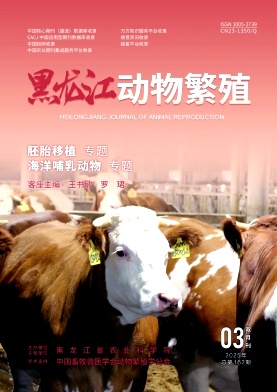
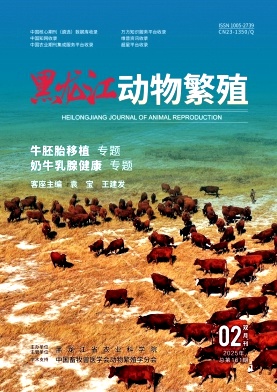
Hu Xiaochen;Lyu Chenchen;Zhu Xiaoting;Shi Qiaoting;Qiao Zhihui;Wang Xiangnan;Zhang Nanchi;Luan Manru;Liu Aobing;Zhang Chenhui;Zhang Zijing;Wang Eryao;To investigate the factors influencing the effects of superovulation and embryo transfer in Limousin cattle, a total of 8 Limousin donor cows and 26 Simmental recipient cows were used in this study. Donor cows were superovulated with a CIDR + FSH + PG + GnRH protocol, and recipient cows were synchronized using a GnRH + PG regimen. The numbers of follicles and corpora lutea were determined by B-ultrasonography and rectal palpation. Embryo collection and transfer were conducted by non-surgical methods. Data were statistically analyzed using Spearman rank correlation and Fisher's exact test. The results showed that the number of corpora lutea on the day of embryo flushing was significantly and strongly positively correlated with the number of recovered embryos(rS=0. 868, P=0. 006). The number of pre-superovulation ovarian follicles in donor cows showed a positive but non-significant tendency with embryo yield(rS=0. 476, P=0. 236). After estrus synchronization, the pregnancy rate of recipient cows with grade A corpora lutea was 61. 11%(11/18), and that with grade B corpora lutea was 50. 00%(4/8), showing no significant difference(P=0. 683). The pregnancy rate for morula transfer was 52. 63%(10/19), and 71. 43%(5/7) for blastocyst transfer, showing no significant difference(P=0. 658). In conclusion, the number of corpora lutea in donor cows can be an indicator of the embryo production potential. Corpus luteum quality and embryo type in recipient cows have no significant effects on pregnancy rate.
Bibliometric analysis of research on in vitro maturation techniques of cattle and sheep oocytes
Zuo Yelai;Xi Guangyin;To understand the current research progress in in vitro maturation(IVM) technology of bovine and ovine oocytes,this study conducted keyword co-occurrence,density,and trending topic analyses using vosviewer and bibliometrix based on relevant literature published from 2015 to 2025.The results showed that current research on bovine and ovine oocyte IVM commonly focuses on key issues including insufficient follicular microenvironment support,enhanced oxidative stress,mitochondrial dysfunction,increased apoptosis,and vitrification-induced damage.Specifically,bovine studies emphasize microenvironment reconstruction,extracellular vesicle-mediated communication,and molecular quality evaluation,whereas ovine studies concentrate more on cryopreservation vulnerability,antioxidant protection,and IVM quality improvement of oocytes from different sources.In conclusion,the core bottleneck of bovine and ovine oocyte IVM lies in the difficulty of fully reconstructing the in vivo follicular microenvironment in vitro;future optimization should develop more species-specific culture strategies and multidimensional quality evaluation systems based on a comprehensive understanding of shared mechanisms.
Current status of camel breeding technology research
Ma Wenkui;Chen Qianru;Wu Hao;Zhang Zhipeng;Jirigala;Liu Guoshi;As a characteristic economic livestock species in arid and semi-arid regions, camels possess multiple values including meat, milk and fibre. They play a vital role in maintaining the balance of desert ecosystems and increasing herders' incomes. As the camel industry moves towards large-scale and standardized development, the innovation and upgrading of breeding technologies have become the core driving force for the high-quality development of the industry. This article reviews recent domestic and international research progress on camel breeding technologies. It elaborates on reproductive mechanisms such as photoperiod regulation, induced ovulation and follicular development patterns. It also summarizes the key parameters, operational procedures and application effects of breeding techniques, including oestrous synchronization, artificial insemination and embryo transfer. Furthermore, in response to current bottlenecks in technology promotion, the article proposes directions for precision and intelligent development, aiming to provide a reference for the optimized application of camel breeding technologies and the sustainable development of the industry.
Effects of compound probiotics on fattening performance and blood indicators of western crossbred beef cattle
Li Wen;Fan Xinli;You Wenbing;Yusufu Maimait;Luo Shengjin;Hamizhou District Animal Disease Prevention and Control Center;To investigate the effects of compound probiotics(CPP) on fattening performance and blood indicators of finishing beef cattle, a total of twenty 14-month-old Western crossbred beef cattle bulls were chosen and divided into the treatment group(10 bulls) with initial body weights of(358. 83±32. 11) kg and the control group(10 bulls) with initial body weights of(368. 83±16. 72) kg. The control group(10 bulls) was fed a basal diet, while the treatment group(10 bulls) was fed the basal diet supplemented with 0. 2% CPP. The experiment included a 10-day pre-feeding period followed by a 60-day formal trial period. Growth performance, blood biochemical indicators, antioxidant indicators, immune indicators, serum hormone and metabolic regulation indicators, and digestive enzyme activities were measured. The results showed that the average daily gain(ADG) of the treatment group was significantly higher than that of the control group(P<0. 05), while the feed-to-gain ratio(F/G) was significantly lower than that of the control group(P<0. 05). Body height, body oblique length, chest girth, and cross hip height were slightly higher in the treatment group than in the control group(P>0. 05). Serum alkaline phosphatase(ALP) and uric acid(UA) levels in the treatment group were extremely significantly higher than those in the control group(P<0. 01), and inorganic phosphorus(P) content was significantly higher than that in the control group(P<0. 05). Interleukin-6(IL-6) content in the treatment group was significantly higher than that in the control group(P<0. 05), and α-glucosidase activity was extremely significantly higher than that in the control group(P<0. 01). In conclusion, dietary supplementation with CPP can promote skeletal development, regulate lipid metabolism, enhance antioxidant capacity, improve growth performance and feed conversion efficiency, and ultimately enhance the fattening performance of beef cattle.
Application of dynamic changes in vaginal mucus resistance for estrus monitoring and optimal timing of sperm insemination in sika deer
Zhang Wang;Ma Yukai;Shang Ye;Jiang Qi;Guo Xingjian;Li Heping;To investigate the practical effects of vaginal mucus electrical resistance(VER) used for estrus detection and optimal timing of artificial insemination in female sika deer,fifty-six healthy does were synchronized using a CIDR+PMSG+LHRH-A3 protocol.VER values were measured with a vaginal electrolyte analyzer at four time points:CIDR insertion(day 0),CIDR withdrawal(day 12),artificial insemination(day 15) and post-insemination monitoring(day 24).Serum levels of estradiol(E2),luteinizing hormone(LH) and progesterone(P4) were used as hormonal references.At the estrus peak(day 15),VER reached its nadir [(325±48.69)Ω],which was significantly lower than at the other three stages(P <0.01).The VER nadir coincided with the peaks of E2 and LH and the nadir of P4,showing a typical estrous hormone profile.These findings demonstrate that monitoring VER changes could provide a reliable and timely method for assessing estrus status and determining the optimal insemination time in sika deer.
Histopathological study on white spot disease in juvenile turtles(Pelodiscus sinensis)
Liu Liming;Han Mengya;Sun Ruixin;Liu Qing;Song Jing;To explore the pathological lesion characteristics of white spot disease and its impacts on the tissues and organs of Pelodiscus sinensis, healthy juvenile turtles were set as the control group and naturally diseased individuals with white spot disease as the experimental group in this study. Conventional paraffin sectioning and hematoxylin-eosin(H. E.) staining were applied for histopathological observation on the skin, liver and kidney tissues of turtles in both groups. The results revealed that tissues and organs of the control group maintained complete structure with regularly arranged cells and no obvious pathological damage. In contrast, the white spot disease group showed severe pathological lesions in the epidermis and disordered muscle fibers, hepatocytes presented karyopyknosis and rupture, along with renal tubular epithelial cell necrosis, glomerular atrophy and inflammatory cell infiltration. This study demonstrates that white spot disease of P. sinensis is not merely confined to superficial local lesions, can cause multi-organ damage to the liver and kidneys. The research findings can provide reliable histopathological references for the diagnosis, prevention and control of white spot disease in P. sinensis.













Tracking the information about your manuscript
Communicate with the editorial office
Query manuscript payment status Edit officeCollecting, editing, reviewing and other affairs offices
Managing manuscripts
Managing author information and external review Expert Information Expert officeOnline Review
Online Communication with the Editorial Department
Announcements
Downloads
Expert Spotlight
Page Views
Page visits today: 11
Sow Batch Production | Paper
The prevention and control effect of precise immunization on porcine epidemic viral diarrhea in batch production system of large-scale pig farms Effect of a fixed-time artificial insemination program on reproductive performance of replacement gilts across seasons Effects of age at puberty on reproductive performance in French sows Research advances in single fixed-time artificial insemination in sows Practical exploration of batch production to improve reproduction efficiency in sows Carbetocin-induced synchronous daytime parturition in sows Research progress in estrus induction and detection in pigs
Album Embryo Production of Sheep and Goats
Album Artificial Insemination of Sheep & Goats
Album Embryo Production in Sheep
Album Gamete and Embryonic Development